Ultimate India Travel Guide: Best Places to Visit This Year
Introduction
India is a land that defies simple definition. From the snow-capped peaks of the Himalayas to the tropical backwaters of Kerala, it stands as one of the world's most diverse travel destinations. Every state presents a distinct language, cuisine, attire, and landscape, making a journey through the country feel like exploring multiple countries wrapped into one.In recent years, the global travel landscape has witnessed a significant shift. Modern travelers are moving away from superficial sightseeing and are increasingly seeking authentic travel experiences.
Why India is a Dream Destination for Travelers
India possesses an undeniable magnetism that captures the imagination of both domestic and international tourists. Its appeal lies in an extraordinary juxtaposition of the ancient and the modern, the serene and the vibrant.
Cultural and Historical Wealth
The cultural diversity of the country is woven from thousands of years of history. Every region boasts architectural masterpieces, from the intricate marble carvings of the Taj Mahal to the monolithic rock-cut temples of Ellora. Living traditions thrive alongside these monuments, visible in daily rituals, classical dance forms, and regional textile arts.
Natural Landscapes and Wildlife
Few nations offer such geographical variety. Travelers can explore the high-altitude deserts of Ladakh, the dense mangrove forests of the Sundarbans, or the golden sands of the Thar Desert. For wildlife enthusiasts, the country’s national parks offer a sanctuary for rare species, including the Royal Bengal Tiger and the One-horned Rhinoceros.
                  ┌── Mountains (Himalayas, Western Ghats)
                  ├── Deserts (Thar, Rann of Kutch)
India's Terrain ──┼── Coastlines (Goa, Kerala, Andamans)
                  └── Forests & Rivers (Central India, Ganges)
Spiritual and Culinary Traditions
For many, the country is a premier destination for spiritual growth. Cities like Varanasi and Rishikesh offer spaces for reflection, yoga, and wellness. Complementing this internal journey is an incredibly rich food culture. Indian cuisine is an aromatic exploration of spices, where flavors change entirely across geographic borders, offering endless discoveries for food lovers.
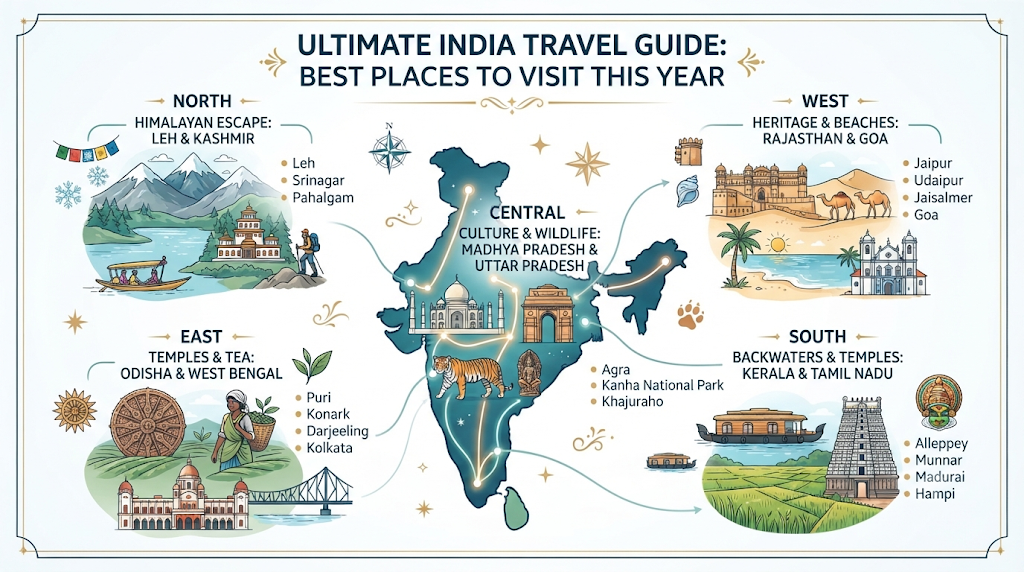
Best Places to Visit in India
To help you navigate the vast array of destinations, we have categorized the top regions based on their unique geographical and cultural traits.
Mountains and Hill Stations
- Shimla: The former summer capital of British India, famous for its colonial architecture, pedestrian-friendly Mall Road, and the historic toy train.
- Manali: A haven for adventure lovers and backpackers, offering Solang Valley’s vistas and acting as the gateway to Lahaul and Spiti.
- Leh-Ladakh: A high-altitude desert characterized by stark mountains, dramatic monasteries like Thiksey, and the brilliant blue waters of Pangong Tso.
- Darjeeling: Nestled in West Bengal, renowned for its sprawling tea estates, panoramic views of Mount Kanchenjunga, and rich Tibetan heritage.
Beaches and Coastal Escapes
- Goa: A blend of Portuguese heritage and coastal relaxation, known for the lively beaches of the north and the serene, isolated shores of the south.
- Andaman Islands: A pristine archipelago in the Bay of Bengal, offering world-class scuba diving, clear turquoise waters, and historical sites like the Cellular Jail.
- Gokarna: Located in Karnataka, this town offers a laid-back, spiritual alternative to busier beach destinations, featuring rocky cliffs alongside pristine sands.
Heritage Destinations
- Jaipur: The "Pink City" of Rajasthan, famous for the grand Amber Fort, Hawa Mahal, and vibrant local handicraft markets.
- Agra: Home to the iconic Taj Mahal, Agra Fort, and the nearby abandoned Mughal city of Fatehpur Sikri.
- Udaipur: Often called the "City of Lakes," praised for its romantic marble palaces reflecting on the calm waters of Lake Pichola.
      [ Taj Mahal (Agra) ]             [ Amber Fort (Jaipur) ]
               │                                  │
               └───────────► [ The Golden Triangle ] ◄───────────┘
                                       ▲
                                       │
                               [ Delhi Heritage ]
Nature and Wildlife
- Jim Corbett: India’s oldest national park, situated in Uttarakhand, famous for its wild tiger population and picturesque riverine landscapes.
- Kaziranga: A UNESCO World Heritage Site in Assam, harboring the world's largest population of the great Indian One-horned Rhinoceros.
- Ranthambore: Located in Rajasthan, this park offers a unique setting where historic fortress ruins blend seamlessly into prime tiger territory.
Spiritual Destinations
- Varanasi: One of the oldest continuously inhabited cities in the world, where twilight Ganga Aarti ceremonies take place on ancient riverfront steps.
- Rishikesh & Haridwar: Twin spiritual towns on the Ganges, globally recognized for yoga learning, meditation centers, and evening river rituals.
- Tirupati: A major pilgrimage center in Andhra Pradesh, home to the revered Venkateswara Temple, drawing millions of devotees annually.
Popular Travel Destinations in India
| Destination | Best For | Best Season | Trip Duration |
| Leh-Ladakh | Adventure & Landscapes | June to September | 7–10 Days |
| Shimla & Manali | Snow & Hill Station Views | October to March | 5–7 Days |
| Jaipur & Udaipur | Heritage, Palaces & Culture | November to February | 6–8 Days |
| Agra | Mughal Architecture & History | October to March | 1–2 Days |
| Goa | Beaches, Nightlife & Seafood | November to February | 4–6 Days |
| Andaman Islands | Water Sports & Marine Life | October to May | 5–7 Days |
| Varanasi | Spiritual Rituals & Culture | October to March | 2–3 Days |
| Rishikesh | Yoga, Wellness & Rafting | September to April | 3–5 Days |
| Kerala Backwaters | Houseboats & Serene Nature | September to March | 5–7 Days |
| Kaziranga Park | Wildlife Safaris & Nature | November to April | 2–3 Days |
India Travel Guide for First-Time Visitors
Planning a primary journey requires a clear understanding of basic logistics to ensure a comfortable travel experience.
Visa and Entry Requirements
Most international travelers can apply for an e-Tourist Visa online before departure. Ensure your passport has at least six months of validity from your arrival date and contains two blank pages.
Transportation Options
The country boasts an extensive transportation network.
- Air Travel: Connects all major cities quickly via domestic carriers.
- Railways: The Indian Railways network is vast and offers a classic travel experience; booking high-tier AC classes (1AC, 2AC, or CC) in advance is highly recommended.
- Local Transit: Auto-rickshaws and app-based cabs (like Uber and Ola) are efficient options for navigating bustling urban areas.
                  ┌── Domestic Flights (Fastest for long distances)
Transportation ───┼── Trains (AC Sleeper / Chair Car for scenic routes)
                  └── App Cabs & Auto-Rickshaws (Best for inner-city transit)
Cultural Etiquette and Safety
Respect local traditions by dressing modestly, particularly when visiting religious sites. Always remove your footwear before entering temples or homes. Cover your shoulders and knees to align with local customs.For safety, stay aware of your surroundings, avoid poorly lit areas at night, and keep your essential documents secure. Stick to bottled water from reputable brands to avoid stomach issues, and enjoy freshly cooked food served hot.
Budget and Accommodation
The country accommodates every financial plan. You can choose from budget-friendly backpacker hostels, welcoming family-run homestays, mid-range boutique heritage properties, or ultra-luxury palace hotels. Carry a mix of small cash notes for local markets and digital payment apps or credit cards for larger establishments.
Things to Do in India
A trip through the country can be customized around diverse activities that match your personal interests.
- Attend a Ganga Aarti: Witness the rhythmic evening prayer ceremony on the banks of the Ganges in Varanasi or Rishikesh, accompanied by incense and oil lamps.
- Savor Regional Street Food: Taste local delicacies such as chaat in Delhi, vada pav in Mumbai, and puchkas in Kolkata.
- Go on a Heritage Walk: Explore old city quarters like Chandni Chowk in Old Delhi or the French Quarter in Puducherry on foot with a knowledgeable guide.
- Embark on a Wildlife Safari: Track elusive tigers from an open-top jeep in Ranthambore, Kanha, or Bandhavgarh National Parks.
       [ Morning ] ──► Heritage Walk or Temple Visit
       [ Afternoon ] ──► Culinary Tour or Local Handicraft Shopping
[ Evening ] ──► Traditional Dance Performance or Sunset Boat Ride- Ride the Waves: Experience white-water rafting on the Ganges in Rishikesh or enjoy scuba diving among coral reefs in the Andaman Islands.
- Trek the Himalayas: Challenge yourself with world-class trekking routes like the Valley of Flowers in Uttarakhand or the Markha Valley in Ladakh.
- Celebrate Festivals: Align your travel dates with major cultural events like Holi (the festival of colors) or Diwali (the festival of lights) to witness communities celebrating together.
- Join a Yoga Retreat: Spend time at an authentic ashram in Rishikesh or an Ayurveda wellness sanctuary in Kerala to restore mind and body balance.
Creating the Perfect India Travel Itinerary
To maximize travel efficiency and avoid spending too much time in transit, plan your routes based on regional clusters.
5-Day Golden Triangle Itinerary
- Day 1–2: Explore the historic sights of Delhi (Red Fort, Qutub Minar, Humayun's Tomb).
- Day 3: Take an early train to Agra; visit the Taj Mahal and Agra Fort.
- Day 4–5: Drive to Jaipur; explore the Amber Fort and City Palace before returning to Delhi.
7-Day Southern India Escape
- Day 1–2: Arrive in Kochi; explore the historic Fort Kochi area and watch a Kathakali dance performance.
- Day 3–4: Drive to Munnar to wander through tea plantations and hike local nature trails.
- Day 5: Travel to Alleppey for an overnight cruise on a traditional thatched houseboat.
- Day 6–7: Unwind on the golden beaches of Marari or Kovalam before departing from Kochi.
Kochi (Culture) ──► Munnar (Tea Hills) ──► Alleppey (Houseboats) ──► Beach Relaxation10-Day Royal Rajasthan Journey
- Day 1–3: Begin in Jaipur, covering forts, local textile markets, and historic astronomical observatories.
- Day 4–5: Travel to Jodhpur to see the imposing Mehrangarh Fort and the blue-painted houses of the old city.
- Day 6–8: Journey into the Thar Desert at Jaisalmer; experience a camel safari and camp overnight under the desert stars.
- Day 9–10: Conclude your trip in the lakeside city of Udaipur before catching a flight back to a major hub.
15-Day Ultimate Grand Tour
- Day 1–4: Delhi and Agra historic highlights.
- Day 5–8: Fly to Rajasthan (Jaipur or Udaipur) to immerse yourself in royal history.
- Day 9–11: Fly to Varanasi to experience the spiritual core of the country along the ghats.
- Day 12–15: Fly south to Kerala for backwater relaxation, wildlife viewing, and wellness therapies before heading home.
Best Time to Visit India
Because of its massive size, the country experiences vastly different weather patterns across its regions at any given time.
Winter Travel (October to March)
This is widely considered the peak tourist season across most of the country. Central India, South India, and the plains of the North experience pleasant daytime temperatures and cool nights, making it the ideal window for sightseeing, desert safaris, and beach activities.
Summer Travel (April to June)
As temperatures rise in the plains, travelers head up to the hill stations of the Himalayas. Destinations like Himachal Pradesh, Uttarakhand, Ladakh, and Sikkim offer cool weather and clear skies, perfect for trekking and high-altitude road trips.
   [ Oct - Mar ] ──► Best for Plains, Deserts & South India Beaches
   [ Apr - Jun ] ──► Best for Himalayan Hill Stations & High Treks
   [ Jul - Sep ] ──► Best for Lush Greenery (Western Ghats & Monsoon Treks)
Monsoon Travel (July to September)
The rainy season brings lush green landscapes to regions like the Western Ghats, Kerala, and parts of Madhya Pradesh. While heavy rains can occasionally disrupt travel schedules, it is a spectacular time to see waterfalls and experience traditional Ayurvedic treatments.
Best Seasons for Different Regions of India
| Region | Best Time to Visit | Popular Activities | Weather |
| North India | October to March | Heritage sightseeing, fort tours, food walks | Pleasant days, chilly nights |
| South India | November to February | Backwater cruises, beach trips, temple visits | Warm, comfortable, low humidity |
| East India | October to March | Tea garden tours, colonial walks, wildlife | Cool, pleasant breeze |
| West India | November to February | Desert camping, beach sports, fort tracking | Dry, warm days, cool desert nights |
| Northeast India | October to April | Living root bridge treks, wildlife safaris | Refreshing, clear views, cool |
Local Tour Guides in India
Navigating a destination rich in history requires deep context. Hiring a licensed local tour guide can significantly elevate your entire journey.
Why Local Insight Matters: A historic wall or an old temple structure truly comes alive when you learn about the legends, architectural styles, and historical events connected to it. Local guides translate these complexities seamlessly for visitors.
                  ┌── Deciphers complex historical architecture
Local Guide Role ─┼── Opens access to authentic, hidden food spots
                  └── Provides critical language and navigation support
Beyond historical data, local guides share insights into daily customs, point out hidden alleyway cafes missed by major travel blogs, and assist with language translation. They also help you navigate busy local markets safely and comfortably, ensuring you enjoy an authentic experience while supporting the local economy.
Best Homestays in India
Choosing a homestay over a conventional hotel allows you to experience genuine hospitality firsthand.
- Cultural Immersion: Living with a local family gives you a window into their daily routines, festivals, and family values.
- Authentic Culinary Experiences: Enjoy home-cooked meals prepared with fresh, locally sourced ingredients and traditional family recipes.
- Personalized Guidance: Your hosts can share invaluable tips on local transport, lesser-known attractions, and fair pricing at regional shops.
   Traditional Hotel                 Authentic Homestay
┌──────────────────────┐          ┌──────────────────────┐
│ Standard Room        │          │ Heritage Living Space│
│ Commercial Kitchen   │    VS    │ Family Recipes       │
│ Uniform Service      │          │ Local Conversation   │
└──────────────────────┘          └──────────────────────┘
From the heritage properties of Rajasthan to the traditional plantation estates of Coorg and the wooden cottages of Himachal Pradesh, homestays support sustainable tourism by ensuring your accommodation spend directly benefits the host family.
Village Tourism in India
True cultural depth is often found away from busy urban centers, in rural regions where traditional ways of life remain vibrant.Village tourism allows travelers to experience rural life up close. You can watch local artisans practice ancient crafts like pottery, weaving, and metalwork, or learn about traditional, eco-friendly farming methods.
[ Urban Centers ] ──( Travel Shift )──► [ Rural Villages ]
                                               │
                                       ├── Traditional Crafts
                                       ├── Sustainable Living
                                       └── Organic Farming
Visiting places like Hodka in Gujarat, Pipli in Odisha, or the clean village of Mawlynnong in Meghalaya provides a peaceful break from busy city life. It also helps preserve ancestral arts and supports community-led conservation efforts.
Homestays vs Hotels vs Resorts
| Feature | Homestay | Hotel | Resort |
| Cost | Budget to Mid-range | Economical to Luxury | Premium to Ultra-luxury |
| Experience | Cultural and intimate | Standardized and private | Leisure and all-inclusive |
| Local Interaction | Very high | Minimal to professional | Limited to staff interactions |
| Amenities | Essential home comforts | Standard business facilities | Spas, pools, multi-cuisine dining |
| Cultural Exposure | Highly authentic | Limited / Decor only | Curated entertainment |
Pilgrimage Tours in India
For centuries, spiritual journeys have drawn travelers looking for inner peace and historical perspective.
Iconic Spiritual Circuits
- Char Dham: A revered circuit in the Uttarakhand Himalayas comprising Yamunotri, Gangotri, Kedarnath, and Badrinath.
- Varanasi: The spiritual heart of India, where millions gather to perform sacred rituals along the Ganges.
- Tirupati & Vaishno Devi: Major hill shrines that showcase incredible devotion and efficient crowd management systems.
- Bodh Gaya: The sacred site where Siddhartha Gautama attained enlightenment under the Bodhi Tree.
- Golden Temple: Located in Amritsar, welcoming all visitors with its beautiful architecture and large community kitchen (langar).
   [ Bodh Gaya ] ────────► Spiritual Reflection & Buddhist History
   [ Golden Temple ] ────► Universal Equality & Selfless Service
   [ Varanasi ] ─────────► Ancient Rituals & Eternal Traditions
Adventure Activities in India
For adrenaline seekers, the country’s diverse geography offers a wide variety of outdoor thrills.
- Mountain Trekking: Explore challenging trails like the Chadar Frozen River Trek in Ladakh or the scenic Valley of Flowers in Uttarakhand.
- White-Water Rafting: Navigate exciting river rapids on the Ganges in Rishikesh or the Teesta River in Sikkim.
- Paragliding: Glide over beautiful landscapes at Bir Billing in Himachal Pradesh, a globally renowned paragliding destination.
- Desert Safaris: Take a jeep or camel trek deep into the sand dunes of Jaisalmer or the unique salt flats of the Rann of Kutch.
       [ Air ] ──► Paragliding in Bir Billing
       [ Water ] ──► Scuba Diving in Andamans / Rafting in Rishikesh
       [ Land ] ──► High-Altitude Trekking in Ladakh
Always prioritize safety by booking through certified adventure operators who use well-maintained equipment and employ experienced local guides.
How HolidayLandmark Helps Travelers Plan Better Trips
Planning a trip across a country as vast as India is much easier with the right resources. HolidayLandmark serves as a comprehensive travel discovery and planning platform designed to simplify your journey.
                         [ HolidayLandmark ]
                                  │
         ┌────────────────────────┼────────────────────────┐
         ▼                        ▼                        ▼
[ Expert Itineraries ]    [ Verified Guides ]    [ Authentic Homestays ]
The platform helps you find hidden destinations, read reliable travel guides, and access clear transportation tips. By connecting you directly with local guides, authentic homestays, and regional tour experts, HolidayLandmark ensures your trip is built on trusted, local insights.Whether you are looking for a quiet village experience, an adventurous mountain trek, or a well-planned pilgrimage route, the platform provides the essential tools to build balanced itineraries tailored to your travel style.
Responsible and Authentic Travel
As tourism increases, traveling mindfully is essential to preserve the destinations we love to explore.
                   ┌── Minimize single-use plastic waste
Responsible Travel ┼── Support local businesses & craft markets
                   └── Respect indigenous traditions & clothing norms
Key Practices for Mindful Travelers
- Reduce Waste: Carry a reusable water bottle and avoid single-use plastics to keep natural environments clean.
- Support Local Communities: Spend your travel budget at local homestays, community markets, and family-run restaurants rather than large international chains.
- Respect Local Customs: Ask for permission before taking photographs of people, dress modestly at religious sites, and honor local traditions with an open mind.
Future of Travel in India
The travel landscape is evolving rapidly, driven by technology and changing traveler preferences.
                      ┌── Experiential & Slow Tourism
Future Travel Trends ─┼── Growth in Rural & Community Tourism
                      └── Digital Booking for Certified Local Experts
More travelers are choosing slow, experiential tourism over fast-paced sightseeing. Rural and eco-friendly tourism continue to grow as people seek quiet, natural spaces. At the same time, digital platforms make it easier to connect directly with certified local guides and authentic homestays, ensuring travel in India becomes more personalized, sustainable, and memorable for everyone.
Frequently Asked Questions (FAQs)
Q: Is India safe for solo international travelers?
A: Yes, it is generally safe, provided you take standard precautions. Stick to well-traveled routes, avoid walking alone in unfamiliar areas late at night, use trusted app-based transport, and respect local dress customs to ensure a smooth trip.
Q: Do I need to get vaccinations before traveling to India?
A: It is wise to consult your doctor well in advance. Commonly recommended precautions include updates for Hepatitis A and B, Typhoid, and Tetanus. Carrying a basic first-aid kit with stomach remedies is also recommended.
Q: How do I handle currency and payments across the country?
A: Major hotels, restaurants, and shops readily accept international credit cards. However, smaller towns, local markets, and rural homestays usually require cash in Indian Rupees (INR). ATMs are widely available in urban centers.
Q: Can I get by with English, or do I need to learn local languages?
A: English is widely spoken and understood in cities, hotels, major tourist attractions, and transport hubs. Learning a few basic phrases in Hindi or the regional language of the state you are visiting is always appreciated by locals.
Q: What should I wear when visiting temples or mosques?
A: Dress conservatively when visiting any religious site. Keep your shoulders and knees covered, remove your shoes before entering, and carry a light scarf in case you need to cover your head.
Conclusion
A journey through India is a deeply rewarding experience that stays with you long after you return home. Its incredible diversity—from the peaceful Himalayan peaks to the energetic streets of its historic cities—offers endless opportunities for discovery. Crafting a truly memorable trip requires thoughtful planning, a willingness to explore beyond standard tourist hubs, and an openness to learning from local communities.Embracing authentic, localized experiences is the best way to connect with the true spirit of the country.
