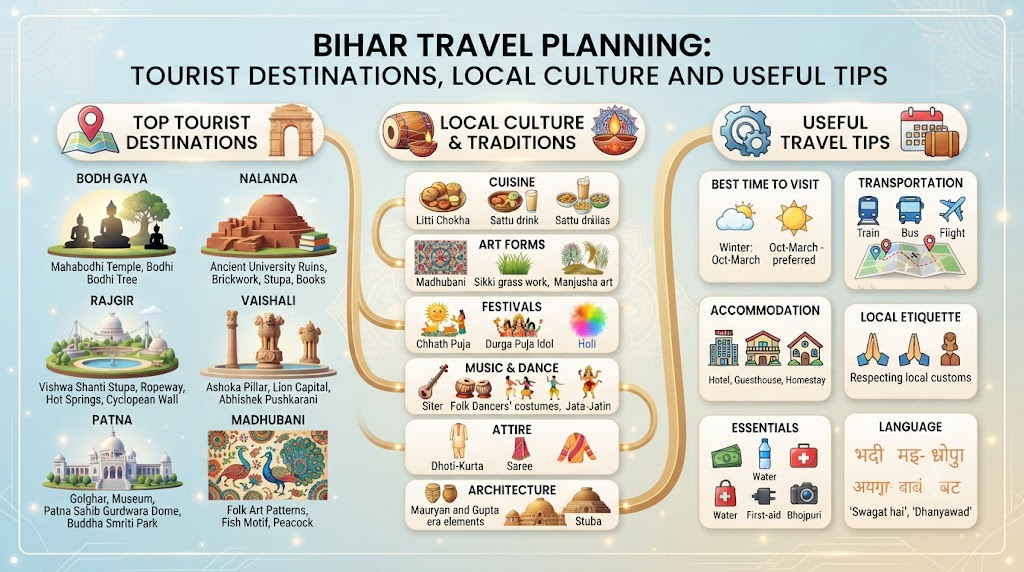
Bihar Travel Planning: Tourist Destinations, Local Culture and Useful Tips
Introduction
Backpacking through eastern India offers an intense, grounded travel experience that luxury tour itineraries rarely capture. Instead of chartered buses and pre-booked buffets, independent travelers navigate shared passenger trains, bustling junction tea stalls, and early-morning walks through ancient ruins. Many independent explorers rely on MeraApnaBihar to sift through regional transit routes, find budget-friendly guesthouses, and understand local conventions across diverse districts.This guide explores prominent Bihar Tourist Places from the perspective of an independent, budget-conscious traveler. It focuses on affordable connectivity, walkable historic circuits, regional food traditions, and realistic daily planning.
Approaching Bihar Tourism as an Independent Traveler
For backpackers, moving through the middle Gangetic plains requires patience, curiosity, and practical route planning. The ancient kingdom of Magadha and early republican territories left behind an astonishing density of archaeological treasures, but these sites sit right inside living, high-density communities rather than sterile tourist enclaves.Understanding Bihar Culture and Heritage from a slow-travel perspective means traveling by local passenger trains, stopping at roadside sattu stalls, and learning how sacred spaces operate alongside daily market life. The goal is not checking off landmarks as fast as possible, but understanding the layers of history preserved by the Archaeological Survey of India while experiencing modern neighborhood hospitality.Traveling independently through these destinations requires sensible packing, awareness of local customs, and flexibility with regional transport timetables. When approached with an open mindset, the state offers rewarding historical depth at a fraction of the cost of mainstream tourist circuits.
Backpacker Transit Routes: Regional Travel Clusters
Grouping your destinations along established rail lines helps keep transportation costs down and prevents unnecessary backtracking across the state.
| Route Corridor | Key Stations / Hubs | Travel Character | Recommended Pace |
| The Grand Chord Heritage Run | Gaya, Sasaram | Monasteries, sandstone tombs, pilgrimage walks | 3–4 Days |
| Central Magadha Loop | Patna, Bakhtiyarpur, Rajgir | Brick ruins, aerial ropeway, riverfronts | 3–4 Days |
| North Gangetic Plains | Hajipur, Muzaffarpur, Vaishali | Ashokan edicts, countryside roads, orchard towns | 2–3 Days |
| The Far Western Frontier | Bagaha, Valmiki Nagar | River barrages, forest trails, wildlife reserves | 3–4 Days |
Essential Bihar Tourist Places for Independent Explorers
When evaluating the most practical Places to Visit in Bihar, focusing on transit-accessible, walkable locations ensures smooth travel on a modest budget.
1. Bodh Gaya (Gaya District)
Bodh Gaya is the world hub of Buddhist pilgrimage and one of the easiest places in eastern India for independent travelers to explore on foot.
- Backpacker Highlights: The central landmark is the Mahabodhi Temple complex, surrounded by quiet gardens and monastic walkways where travelers can sit and read. Surrounding streets host dozens of international monasteries built by Sri Lankan, Thai, Bhutanese, and Japanese communities, many featuring traditional regional architecture.
- Transit & Lodging: Gaya Junction is 13 kilometers north, easily reached by shared auto-rickshaws or public buses. Budget guesthouses and pilgrim rest houses line the roads branching off the main temple circle, offering simple, clean rooms.
- Practical Tips: Mobile phones and large daypacks must be checked at the central security counter before entering the main temple complex. Carry a cloth tote for personal essentials, and wear slip-on sandals that are easy to leave at shoe stands.
2. Nalanda (Nalanda District)
Nalanda is home to the excavated ruins of one of history’s greatest residential monastic universities, which hosted thousands of international scholars between the 5th and 12th centuries CE.
- Backpacker Highlights: The extensive brick foundations of Monastery Site 1 and Temple Site 3 reveal multi-level dormitories, study cells, and ancient well structures. The adjacent Nalanda Archaeological Museum displays fine bronze figures, stone sculptures, and terracotta seals discovered during digs.
- Transit & Lodging: Nalanda sits along the highway between Bihar Sharif and Rajgir. Backpackers can base themselves in Rajgir (15 km away) and take frequent shared auto-rickshaws or local buses directly to the Nalanda ticket gate.
- Practical Tips: The excavation complex is large and completely open to the sky. Pack a refillable water bottle, a broad-brimmed hat, and light shoes designed for sustained walking across gravel paths.
3. Rajgir (Nalanda District)
Nestled in a scenic valley bordered by seven hills, Rajgir served as the early capital of ancient Magadha and offers exceptional hill walking and historical exploration.
- Backpacker Highlights: Take the stone hiking trail or single-chair aerial ropeway to the top of Ratnagiri Hill to visit the Vishwa Shanti Stupa and Vulture’s Peak (Gridhakuta). Walk the remnants of the Cyclopean Wall, built from massive uncut stones without mortar, and explore the ancient site of Bimbisara’s Jail.
- Transit & Lodging: Direct local passenger trains run from Patna to Rajgir Railway Station. Clean budget lodges and pilgrimage rest houses (dharamshalas) are concentrated near the station and along Kund Road.
- Practical Tips: Shared tempos connect the town center to the base of the Peace Pagoda ropeway. Secure your ticket early in the morning, as lines can back up on weekends and state holidays.
4. Patna (Patna District)
The state capital combines fast-paced city life with historic monuments stretching from Mauryan Pataliputra to colonial riverfront warehouses.
- Backpacker Highlights: The Bihar Museum is a modern, world-class institution housing ancient stone sculptures (including the Didarganj Yakshi) and immersive ethnographic galleries. Wander through the quiet grounds of Kumhrar to see ancient pillar foundations, visit the hemispherical Golghar granary, and explore the historic river alleys surrounding Takht Sri Patna Sahib.
- Transit & Lodging: Patna Junction is a premier railway intersection. Budget hotels, state-run dorms, and backpacker-friendly lodges are clustered around Station Road and Fraser Road.
- Practical Tips: Avoid hailing private cabs for short runs. Use the shared auto-rickshaw routes that run along Bailey Road and Ashok Rajpath for cheap, efficient transit across town.
5. Vaishali (Vaishali District)
Vaishali offers quiet rural roads that once formed the territory of the ancient Licchavi republic, an early model of participatory governance.
- Backpacker Highlights: The Kolhua complex features an intact, polished sandstone Ashokan Pillar surmounted by a single lion capital, positioned beside an excavated brick stupa and an ancient water tank. A separate mound houses the excavated Relic Stupa, where an urn containing ash relics of the Buddha was unearthed.
- Transit & Lodging: Vaishali is located about 55 kilometers north of Patna. Because tourist accommodations in Vaishali are basic, independent travelers usually make it a day trip by taking an early-morning bus from Patna over the Ganga bridge to Hajipur, followed by a shared local tempo.
- Practical Tips: Bring your own daytime snacks and water, as roadside tea stalls around the archaeological sites offer only basic refreshments.
6. Sasaram (Rohtas District)
Located along the historic Grand Trunk Road, Sasaram is a rewarding rail stop for travelers interested in monumental stone architecture.
- Backpacker Highlights: The Tomb of Sher Shah Suri is an architectural marvel. Built of red sandstone, this three-tiered octagonal tomb rises from an artificial lake and features intricate stone screens, domed kiosks, and panoramic terrace views.
- Transit & Lodging: Sasaram Junction sits on the Grand Chord train line, offering quick connections to Gaya and Varanasi. Modest hotel rooms and budget lodges are located within walking distance of the railway platform.
- Practical Tips: The tomb site is compact and peaceful during the early morning. It can easily be explored as a half-day stopover on a train journey across southern Bihar.
7. Valmiki National Park (West Champaran District)
Located in the northwestern corner of the state along the Nepal border, this tiger reserve is an uncrowded haven for nature lovers.
- Backpacker Highlights: Walking along the Gandak River barrage at Valmiki Nagar offers clear views of the Himalayan foothills on clean days. Forest vehicle trails pass through Sal forests that shelter leopards, deer, wild boar, and winter bird flocks.
- Transit & Lodging: Take a train to Bagaha, followed by a local bus or shared utility vehicle to Valmiki Nagar. The state forest department operates affordable eco-huts and forest rest houses that can be reserved through local counters.
- Practical Tips: Public bus transport drops sharply after late afternoon. Plan to reach Valmiki Nagar before nightfall to secure your room and arrange entry permits for morning forest drives.
Things to Do in Bihar: Experiential and Cultural Pursuits
For an immersive trip, mix sightseeing with interactive cultural experiences. Here are a few worthwhile Things to Do in Bihar:
- Ride Passenger Trains Between Historic Towns: Skip private car hires on legs like Patna to Gaya or Gaya to Sasaram. Taking local express trains gives you time to chat with commuters, students, and pilgrims while saving on travel costs.
- Browse Rural Art Villages: Visit regional craft clusters around Madhubani to meet Mithila painting practitioners working in open courtyards, where you can buy original artwork directly from artists without middleman markups.
- Spend Dusk at the River Ghats: Sit along the steps of Gandhi Ghat or Kali Ghat in Patna at sunset to watch local life, wooden fishing boats, and evening devotional oil-lamp rituals along the water.
- Climb Monastic Hills: Hike the stone steps up Dungeshwari Hill near Bodh Gaya to visit rock-cut caves where early ascetics practiced meditation before descending into the river plains.
- Explore Local Haats (Weekly Markets): Wander through weekly village markets in Nalanda or Vaishali districts to see seasonal produce, traditional iron tools, and clay pottery sold directly by village artisans.
Famous Food of Bihar: Everyday Sustenance for Travelers
Bihar's traditional dishes are nutritious, affordable, and crafted to provide long-lasting energy for physical labor and travel.
- Litti Chokha: The definitive street food across the state. Baked dough balls stuffed with seasoned sattu (roasted chickpea flour mixed with carom seeds, mustard oil, garlic, and pickles) are toasted over charcoal, dipped in ghee, and served with a smoky mash of roasted eggplants, tomatoes, and potatoes.
- Sattu Sharbat: Found at wooden carts near every bus stand and railway station. Roasted gram flour is mixed into chilled water with black salt, roasted cumin, and green chilies for a savory, fiber-rich cooler. A sweet jaggery-mixed version is also widely available.
- Silao Khaja: Available in the market village of Silao between Nalanda and Rajgir. These light, multi-layered, crispy pastries are gently glazed with sugar syrup and make a great travel snack that lasts for days.
- Gaya Tilkut: A winter specialty made by repeatedly pounding toasted sesame seeds with melted jaggery or sugar into crisp, crumbly discs.
- Dal Pitha: Dumplings made from steamed rice flour stuffed with spiced Bengal gram paste, commonly served with green coriander chutney at small family eateries during winter.
Festivals of Bihar: Timing and Travel Logistics
Experiencing a major regional festival offers unforgettable cultural insight, but it requires advance planning to navigate peak crowds.
- Chhath Puja: Celebrated in late October or November, this festival honors the sun across four days of strict rituals. Worshippers prepare offerings like sweet wheat-and-jaggery Thekua and gather along riverbanks at dusk and dawn. Long-distance trains and budget hotels book up months ahead; backpackers should confirm transport early or plan to base themselves outside main transit hubs.
- Makar Sankranti: Celebrated in mid-January, marking the winter harvest. Street markets overflow with Chura (flattened rice), thick farm curd, and sesame sweets, making it a great time to sample regional food traditions.
- Sonepur Mela: Held annually along the Gandak River on Kartik Purnima (November/December), this historic trade fair features handicraft stalls, theater tents, and agricultural commerce that can be easily explored on day trips from Patna.
- Buddha Jayanti: Celebrated during the full moon in April/May, this festival fills Bodh Gaya with quiet monastic processions, candlelit evening walks, and public chanting across international temples.
Education, Public Service, and Local Daily Life
A backpacker wandering through regional hubs will quickly notice the sheer number of study centers, libraries, and bookstalls filling the streets. Education and civil service careers are central to local social life.Many readers following MeraApnaBihar track news related to Bihar Government Jobs, departmental openings, and exams held by the Bihar Public Service Commission (BPSC). For candidates following these announcements, staying updated through official commission gazettes guarantees accurate information on deadlines, syllabus changes, and testing rules.
Backpacker Travel Realities: Budgets, Safety, and Seasons
A practical Bihar Travel Guide helps independent travelers balance low costs with realistic safety and comfort standards.
Estimating Travel Expenses
- Lodging: Simple guesthouses, station retiring rooms, and basic hotels in cities like Patna, Gaya, and Rajgir generally range from 600 to 1,500 rupees per night for a clean double room.
- Food: A full meal of fresh Litti Chokha or a traditional rice-dal-vegetable plate (thali) at busy local eateries typically costs between 60 and 150 rupees.
- Transit: Shared auto-rickshaws cost between 15 and 40 rupees per hop, while local train tickets between nearby districts rarely exceed 50 to 100 rupees.
Best Travel Months
- October to March (Pleasant / Winter): The ideal window for backpacking. Daytime temperatures hover between 15°C and 25°C, making walking tours through exposed archaeological ruins comfortable. Keep in mind that heavy morning fog can disrupt railway schedules in December and January.
- April to June (Summer Heat): Temperatures consistently climb past 40°C. Backpacking during this period requires early morning starts, midday indoor rest, and careful hydration.
- July to September (Monsoon Rains): Brings cooler temperatures alongside high humidity and muddy unpaved roads. Rural travel to nature preserves can be slowed down by swollen river systems.
Street Smarts, Site Etiquette, and Safety Advice
- Pack Light for Easy Moves: Paved sidewalks can be broken or uneven in busy market streets. Travel with a sturdy backpack rather than rolling suitcases to navigate railway footbridges and auto stands with ease.
- Dress Modestly: When entering temples, mosques, monasteries, and gurdwaras, wear pants or skirts that cover your knees, and shirts that cover your shoulders. Carry slip-on footwear and socks to protect your feet from hot stone floors.
- Stay Aware at Busy Stations: Keep your daypack zipped and watch your belongings in crowded station concourses. Use official prepaid auto stands outside major railway terminals to avoid inflated fares.
- Verify Booking and Employment Notices: Purchase entry tickets exclusively at official monument booths or government web portals. Similarly, avoid middlemen offering unofficial ticketing, quick entry, or unverified job opportunities, relying instead on official department portals.
Practical Travel / Local Information Example
Scenario: A 3-Day Budget Train Route (Patna – Nalanda – Rajgir – Gaya)
An independent traveler with a limited budget wants to explore core historical sites without renting a private car:
- Day 1: Patna City on Local Transit
- Arrive at Patna Junction via morning train; check into a budget lodge near the station.
- Catch a shared auto along Bailey Road to visit the Bihar Museum for an overview of local history.
- Walk down to the Ganga riverfront ghats near Patna University to watch the evening sunset.
- Eat dinner at a bustling local street shop serving hot Litti Chokha.
- Overnight stay in Patna.
- Day 2: Early Train to Nalanda and Rajgir
- Board an early-morning passenger train from Patna to Rajgir, stepping off at Nalanda station or taking a shared tempo from Rajgir.
- Spend the morning touring the excavated Nalanda University ruins and the nearby museum.
- Take a shared auto to Silao to sample fresh Khaja, then continue on to Rajgir.
- Check into an affordable guesthouse along Kund Road.
- Ride the aerial ropeway up Ratnagiri Hill to see the Vishwa Shanti Stupa at sunset.
- Overnight stay in Rajgir.
- Day 3: Rajgir Hills to Gaya & Bodh Gaya
- Take an early walk through the Venu Vana bamboo grove or climb the steps to Vulture's Peak.
- Catch a midday bus or shared vehicle from Rajgir to Gaya (around 2 to 2.5 hours).
- Board a shared auto from Gaya bus stand to the Bodh Gaya temple area.
- Visit the Mahabodhi Temple complex and wander through international monastery compounds.
- Sample local sweet Tilkut in the market before catching an overnight train from Gaya Junction.
Key Takeaways
- Use the Rail Network: Take advantage of frequent passenger and express trains to travel cheaply between Patna, Gaya, Rajgir, and Sasaram.
- Travel in the Winter Window: Plan your trip between October and March to avoid punishing summer heat on open excavation grounds.
- Pack Light and Mobile: Choose a sturdy backpack over wheeled luggage to navigate rough streets and footbridges easily.
- Rely on Local Street Food: Eat at busy roadside stalls serving fresh Litti Chokha, sattu coolers, and seasonal sweets to eat well on a budget.
- Reserve Ahead for Festivals: Book trains and guesthouses well in advance if your visit coincides with Chhath Puja or Buddha Purnima.
- Rely on Official Counters: Buy heritage entry tickets and confirm travel advisories directly through verified department desks to avoid unofficial fees.
FAQs
Q1: Is it easy to travel around Bihar as a solo backpacker?
Yes, as long as you plan routes around the extensive railway and bus network. Major destinations like Bodh Gaya, Rajgir, and Patna see steady flows of independent travelers and pilgrims. Staying alert, using shared transit, and keeping travel plans flexible make solo trips practical and affordable.
Q2: What is a realistic daily budget for backpacking in Bihar?
An independent traveler can comfortably travel on 1,000 to 1,800 rupees per day. This budget covers a clean, modest guesthouse room, three street-food or local eatery meals, shared auto-rickshaw transit, and entry tickets to archaeological sites.
Q3: Which season is most comfortable for budget travelers?
The winter months from October to March are the most practical. Mild weather makes walking through large archaeological complexes like Nalanda and climbing the hills of Rajgir enjoyable. Summer months feature intense heat that makes budget travel physically exhausting during the day.
Q4: Can I use shared auto-rickshaws to travel between nearby towns?
Yes, shared auto-rickshaws and tempos are a staple of regional transit. They run frequently on fixed routes between adjacent centers, such as Gaya and Bodh Gaya, Rajgir and Nalanda, and Patna and Hajipur, offering cheap travel with little waiting time.
Q5: What gear should a backpacker pack for exploring ruins in Bihar?
Pack a lightweight backpack, comfortable walking shoes, a refillable water bottle, a broad sun hat, sunglasses, and simple slip-on sandals for temple visits. Carrying a small cloth tote bag is helpful for carrying cameras and documents when large backpacks must be deposited at security counters.
Q6: What food should budget travelers try across local markets?
The most nutritious and affordable staple is Litti Chokha, prepared fresh over charcoal. You should also try chilled savory Sattu Sharbat, seasonal Silao Khaja, Gaya Tilkut, and steaming plates of local rice, lentils, and seasonal vegetable curries at neighborhood eateries.
Q7: How should an independent traveler prepare for Chhath Puja?
If traveling during Chhath Puja, book all train tickets and hotel rooms well in advance. Shared transit routes around river ghats close to vehicular traffic, so prepare for long walks. Be respectful of worshippers observing strict waterless fasts and asking for quiet along prayer routes.
Q8: What are the security rules for visiting the Mahabodhi Temple?
Smartphones, smartwatches, and large luggage cannot be carried into the inner temple complex. Travelers must leave these items at the free cloakroom counters near the main entrance. Handheld digital cameras are usually allowed with a small official ticket fee paid at the counter.
Q9: Where can candidates check verified details for Bihar Government Jobs?
Job seekers should verify recruitment details directly on official government agency portals, such as the Bihar Public Service Commission (BPSC). Informational sites like MeraApnaBihar provide general overviews, but primary notifications remain the only verified source for application rules and exam dates.
Q10: Are dormitory-style accommodations available in major tourist towns?
Yes, affordable dormitory beds and retiring rooms can be booked at major railway stations like Patna Junction and Gaya Junction through Indian Railways counters. In Bodh Gaya and Rajgir, several pilgrim guesthouses and monasteries offer basic, clean room options for independent visitors.
Conclusion
Backpacking across Bihar gives independent travelers direct access to some of South Asia's most transformative historical sites without the barriers of expensive commercial tourism. Taking shared passenger trains, walking along ancient brick foundations at Nalanda, and watching evening prayers along the Ganga reveals a region defined by resilience, spiritual heritage, and warm everyday community life.As a reliable informational guide, MeraApnaBihar helps travelers, students, and residents navigate the state with practical, honest guidance. Because train schedules, site entry policies, local lodging rates, and administrative notices change periodically, always confirm your itinerary details with official local counters, railway desks, and government portals before setting out.
